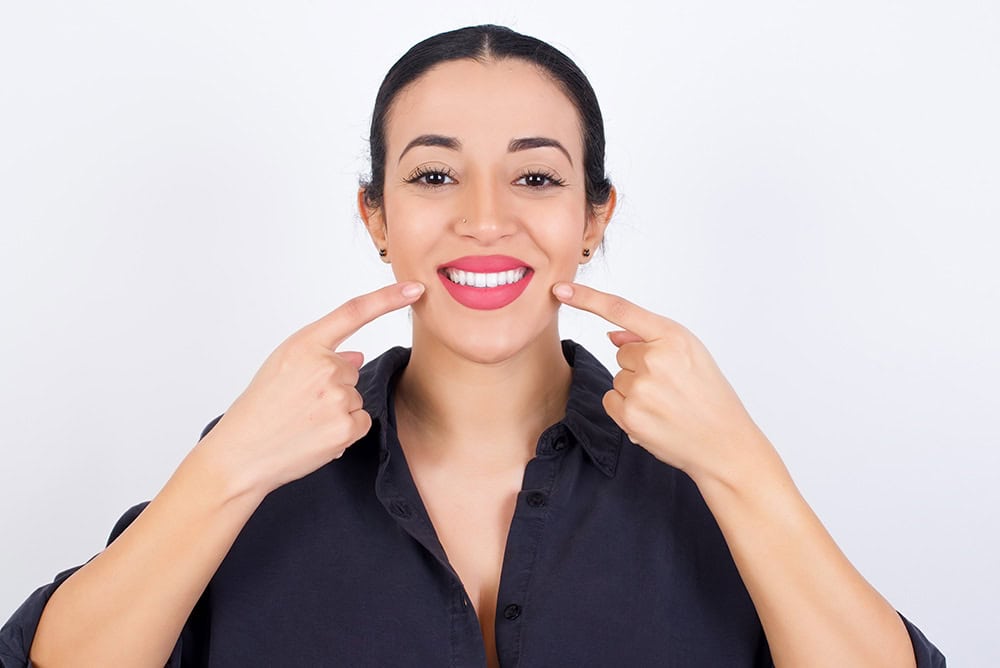
Right after you got your veneers, you probably felt great about your bright, white smile. However, as the years go by, you may have noticed some discoloration. While they do not become stain nearly as easily as your natural tooth enamel, it can still occur over time and the process to whiten porcelain veneers isn’t quite the same as whitening your natural teeth. Continue reading to learn more about veneers, how they can become discolored, and what you can do to lift the stains.
How Do Porcelain Veneers Become Discolored?
Even though veneers are made out of stain resistant material and do not become discolored as easily as your protective enamel, surface stains can still develop after prolonged exposure to highly pigmented foods and drinks, like tea, red wine, coffee, and berries. Smoking tobacco products can also cause this to occur over time.
How Do You Whiten Veneers?
You may be tempted to go to your local drug store and invest in an over-the-counter whitening kit. However, this isn’t the best idea. The material that veneers are made from don’t respond well to this type of whitening. It is a better idea to talk to your dentist about it. Even though you cannot whiten them, your dentist could still improve their look with regular visits. Professional cleaning help to remove surface stains. If your veneers have become very discolored, your dental may recommend replacing them.
How Do You Prevent Veneers from Becoming Stained?
In order to keep your veneers from becoming stained over time, it is important that you maintain a good oral hygiene routine. This means brushing and flossing after you eat. You may feel tempted to use a whitening toothpaste, but this isn’t a good idea. Many ingredients in whitening toothpastes are abrasive and too hard on your veneers.
Be careful what you eat as well. Avoid foods that typically cause staining like curry, jam, tomatoes, soy sauce, red wine, berries, and coffee. Be careful when eating hard foods so you do not cause them to become damaged. Acidic foods like hot sauce and lemons can also cause damage to the surface of the veneers. By carefully choosing what you eat, you can keep them in better shape.
Veneers don’t stain like your natural enamel does, but it pays to care for them so that you don’t need to worry about discoloration in the future. This way, you can enjoy your bright, white smile for years to come.